
Leaving a job can be an important step in your career. Whether you have accepted a new position, decided to continue your education, or simply want to explore a different career path, it is always best to leave your current workplace professionally. One of the most important parts of this process is writing a clear and respectful resignation letter.
If you are searching for a resignation letter example, this guide will help you understand what to include, how to structure your letter, and how to make sure your resignation is communicated professionally.
What Is a Resignation Letter?
A resignation letter is a formal document that informs your employer that you have decided to leave your job. It usually includes your intended last working day and may briefly explain your reason for leaving.
A good resignation letter does not need to be long. In most cases, a short, polite, and professional message is enough. The goal is to officially communicate your decision while maintaining a positive relationship with your employer and colleagues.
Why Is a Resignation Letter Important?
Even if you have already discussed your resignation with your manager, submitting a written letter is an important professional step. It provides a clear record of your decision and helps your employer prepare for your departure.
A professional resignation letter can also help you leave your workplace on good terms. Careers can be unpredictable, and you may work with the same people again in the future. Keeping your resignation respectful and positive can protect your professional reputation.
What Should a Resignation Letter Include?
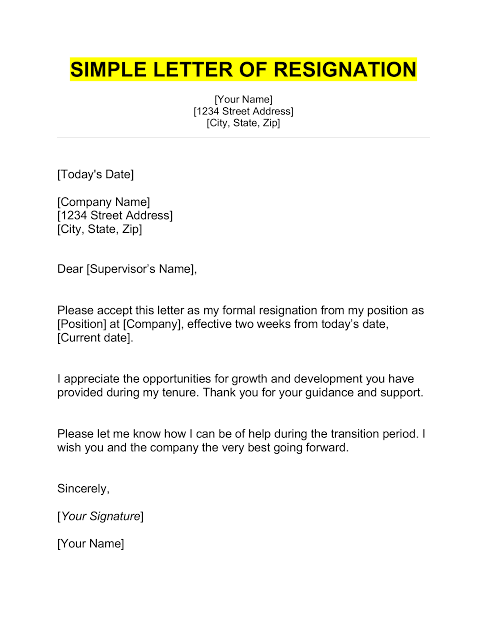
A standard resignation letter usually contains several basic elements:
- Your name and contact information
- The date
- Your employer’s name and company information
- A clear statement of resignation
- Your intended last working day
- A brief expression of appreciation
- An offer to help with the transition
- A professional closing
You do not need to provide a detailed explanation of why you are leaving. If you want to mention your reason, keep it brief and professional.
Simple Resignation Letter Example
Here is a simple resignation letter example that can work for many professional situations:
Dear [Manager’s Name],
Please accept this letter as formal notice of my resignation from my position as [Job Title] at [Company Name]. My last working day will be [Date], in accordance with my notice period.
I am grateful for the opportunities, support, and experience I have gained during my time with the company. I appreciate having had the opportunity to work with such a professional team.
I will do my best to complete my current responsibilities and assist with the transition before my departure.
Thank you for your understanding and support. I wish you and the company continued success in the future.
Sincerely,
[Your Name]
Short Resignation Letter Example
Sometimes you may need a very brief resignation letter. A short version can still be professional and respectful.
Dear [Manager’s Name],
Please accept this letter as formal notice of my resignation from my position as [Job Title] at [Company Name]. My final working day will be [Date].
Thank you for the opportunities and experience I have received during my time with the company. I appreciate your support and wish the team continued success.
Sincerely,
[Your Name]
This type of letter is useful when you want to keep your resignation straightforward without providing unnecessary details.
Resignation Letter Example With a Reason
If you would like to explain why you are leaving, you can include a short and positive explanation. For example:
Dear [Manager’s Name],
I am writing to formally resign from my position as [Job Title] at [Company Name]. My last working day will be [Date].
After careful consideration, I have decided to pursue a new career opportunity that aligns with my long-term professional goals. I am thankful for the valuable experience and skills I have gained during my time with the company.
I will be happy to assist with the transition and ensure that my responsibilities are properly handed over before my final day.
Thank you for your support and understanding. I wish the company and my colleagues all the best.
Sincerely,
[Your Name]
Tips for Writing a Professional Resignation Letter
Writing a resignation letter is relatively simple, but a few important details can make it more professional.
1. Keep It Professional
Even if you are leaving because you had a negative experience, avoid criticizing your manager, coworkers, or company in your resignation letter. The letter should focus on your decision to leave rather than workplace problems.
2. Clearly State Your Last Day
Make sure your employer can easily understand when you plan to finish working. Check your employment agreement or company policy to determine the appropriate notice period.
3. Be Positive
A simple thank-you can help maintain a good professional relationship. You can mention the experience, knowledge, or opportunities you gained during your employment.
4. Offer Transition Support
If possible, offer to help organize your work, document important tasks, or assist with the handover process. This demonstrates professionalism and consideration for your team.
5. Avoid Unnecessary Details
Your resignation letter is not the right place to write a long explanation about your personal circumstances. Keep the message focused, polite, and easy to understand.
Resignation Letter for a New Job
If you are leaving because you have accepted another position, you do not necessarily need to mention the new employer. A simple statement such as “I have decided to pursue another career opportunity” is enough.
Sharing too many details about your next job may not be necessary. Your primary purpose is to formally communicate your resignation and final working date.
Resignation Letter for Personal Reasons
If personal circumstances are the reason for your resignation, you can keep the explanation general. For example:
“Due to personal circumstances, I have decided to resign from my position.”
You are not usually required to include private details in a resignation letter. A professional and concise explanation is often the best approach.
Common Mistakes to Avoid
When preparing your resignation letter, avoid these common mistakes:
- Writing an emotional or angry letter
- Blaming coworkers or management
- Giving too much personal information
- Forgetting to include your final working date
- Using informal or disrespectful language
- Sending the letter without checking your notice requirements
- Making negative comments about your workplace
Remember that your resignation letter may become part of your employment records, so it is best to keep it professional.
Final Thoughts
A resignation letter does not have to be complicated. The best resignation letters are usually clear, brief, respectful, and professional. By clearly stating your resignation, providing your intended last working day, expressing appreciation, and offering transition support, you can leave your position on a positive note.
Whether you need a resignation letter example for a new job, personal reasons, career changes, or another situation, the templates above can give you a useful starting point. Before submitting your letter, make sure you check your employment agreement and follow your workplace’s resignation and notice procedures.
Leaving a job is an important career decision, and a professional resignation letter can help make the transition smoother for both you and your employer.