
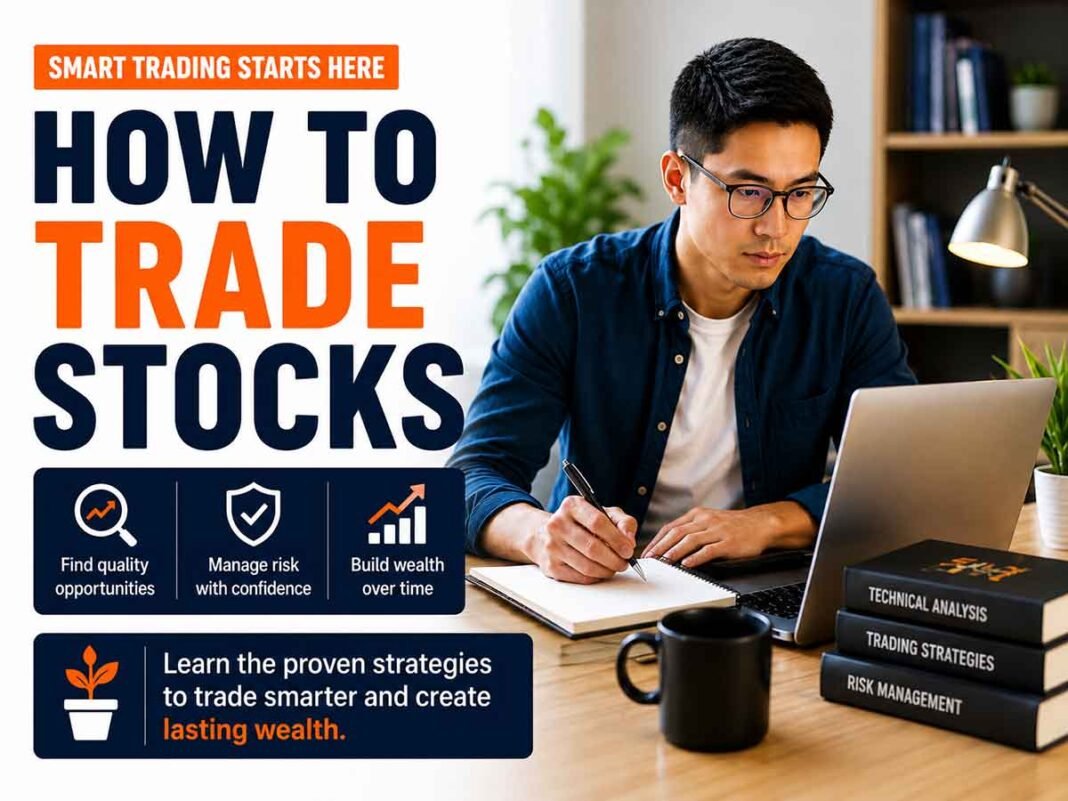
How to Trade Trading is the process of buying and selling financial assets with the goal of making a profit. Today, many people are interested in learning how to trade because online trading platforms have made financial markets more accessible than ever. However, successful trading is not simply about buying an asset at a low price and selling it at a high price. It requires knowledge, planning, patience, and proper risk management.
If you are completely new to trading, understanding the basics is the first step. This guide explains how trading works, what beginners need to learn, and how you can develop a responsible trading strategy.
What Does Trading Mean?
Trading involves buying and selling financial instruments such as stocks, currencies, commodities, cryptocurrencies, and other assets. Traders generally try to benefit from price movements in the market.
For example, if a trader buys a stock for $50 and later sells it for $60, the trader makes a $10 profit per share before fees and taxes. However, if the price falls to $40 and the trader sells, there is a loss.
Different types of traders use different timeframes. Some traders hold positions for minutes or hours, while others may keep investments for days, weeks, or even longer.
How to Trade for Beginners
How to Trade Learning how to trade can seem complicated at first, but beginners can make the process easier by following a structured approach.
1. Learn the Basics of Financial Markets
Before putting real money into a trade, learn how financial markets work. Understand concepts such as market price, bid and ask prices, volatility, liquidity, trading volume, and market trends.
You should also understand the asset you want to trade. Stock trading is different from forex trading, and cryptocurrency markets can behave differently from traditional financial markets.
A strong foundation of knowledge can help you make more informed decisions.
2. Choose a Trading Market
There are several markets available to traders. Common options include:
- Stocks
- Forex
- Cryptocurrencies
- Commodities
- Indices
- Bonds
Beginners should avoid trying to trade everything at once. Choose one market, learn how it works, and become familiar with its risks before expanding into other areas.
3. Choose a Reliable Trading Platform
How to Trade A trading platform allows you to view market prices, analyze charts, and place orders. When choosing a platform, consider factors such as fees, security, available assets, user interface, customer support, and regulatory status where applicable.
It is important to research a platform carefully before depositing money. Never choose a trading service simply because someone promises guaranteed profits.
4. Understand Different Order Types
One of the most important parts of learning how to trade is understanding trading orders.
A market order attempts to execute a trade immediately at the available market price. A limit order allows you to specify the price at which you want to buy or sell.
A stop order can be used to trigger an order when an asset reaches a specific price. Traders use different order types depending on their strategy and risk-management plan.
Understanding these orders can help you avoid mistakes when entering or exiting a position.
5. Learn Technical and Fundamental Analysis
How to Trade Traders commonly use technical analysis, fundamental analysis, or a combination of both.
Technical analysis focuses on price charts, patterns, trends, trading volume, and indicators. Traders may use tools such as moving averages, support and resistance levels, and momentum indicators to study market behavior.
Fundamental analysis looks at factors that can influence an asset’s value. For stocks, this may include company earnings, revenue, debt, economic conditions, and industry trends.
Neither approach guarantees a successful trade. The goal is to use information systematically rather than making decisions based purely on emotions.
6. Create a Trading Strategy
How to Trade A trading strategy provides rules for when you will enter and exit a trade. Without a strategy, beginners may make random decisions based on fear, excitement, or social-media trends.
Your strategy might define:
- Which assets you will trade
- When you will enter a position
- When you will exit
- How much capital you will risk
- What conditions invalidate your trade idea
- How you will evaluate your results
A simple strategy is often easier to understand and test than a complicated one.
7. Practice With a Demo Account
If you are new to trading, consider using a demo or paper-trading account before risking real money. These accounts allow you to practice placing trades using simulated funds.
Demo trading can help you become familiar with charts, order types, trading platforms, and your own decision-making process.
However, remember that demo trading does not completely reproduce the emotional pressure of using real money.
8. Manage Your Risk
How to Trade Risk management is one of the most important parts of trading. Even experienced traders can have losing trades, so protecting your capital is essential.
Avoid putting all your money into one trade. Many traders use predetermined risk limits and stop-loss orders to control potential losses.
You should only trade money that you can afford to lose. Never borrow money simply to increase your trading position, especially when you are still learning.
9. Control Your Emotions
Trading can create strong emotions. A losing trade may cause fear, while a winning trade may create overconfidence. Both can lead to poor decisions.
One of the best ways to control emotions is to follow your trading plan consistently. Do not increase your position simply because you want to recover a previous loss.
Avoid revenge trading, excessive trading, and making decisions based on panic or excitement.
10. Keep a Trading Journal
How to Trade trading journal can help you understand what is working and what is not. Record information such as the asset, entry price, exit price, reason for the trade, risk level, and result.
You can also write down how you felt before and after the trade. Over time, reviewing your journal may help identify repeated mistakes and improve your decision-making process.
Common Mistakes New Traders Make
Beginners often make similar mistakes when learning how to trade. Some of the most common include trading without a plan, risking too much money, following random online tips, using excessive leverage, and expecting quick profits.
Another common mistake is believing that a successful trader never loses. Losses are a normal part of trading. The objective is not to win every trade but to manage risk and develop a process that can work over time.
How Long Does It Take to Learn Trading?
There is no fixed amount of time required to become a good trader. Some people learn the basics within weeks, while developing experience and discipline can take much longer.
Trading should be treated as a skill that requires continuous learning. Market conditions change, and strategies that work in one environment may perform differently in another.
Instead of focusing only on making money quickly, beginners should focus on education, practice, risk management, and consistency.
Final Thoughts
Learning how to trade is a process that requires patience and discipline. Beginners should start by understanding financial markets, choosing a suitable market, learning order types, practicing with a demo account, and developing a clear trading strategy.
Most importantly, trading involves risk, and there are no guaranteed profits. A responsible trader focuses on managing potential losses as carefully as looking for opportunities.
With proper education, realistic expectations, disciplined risk management, and continuous practice, you can build a stronger foundation for your trading journey.