

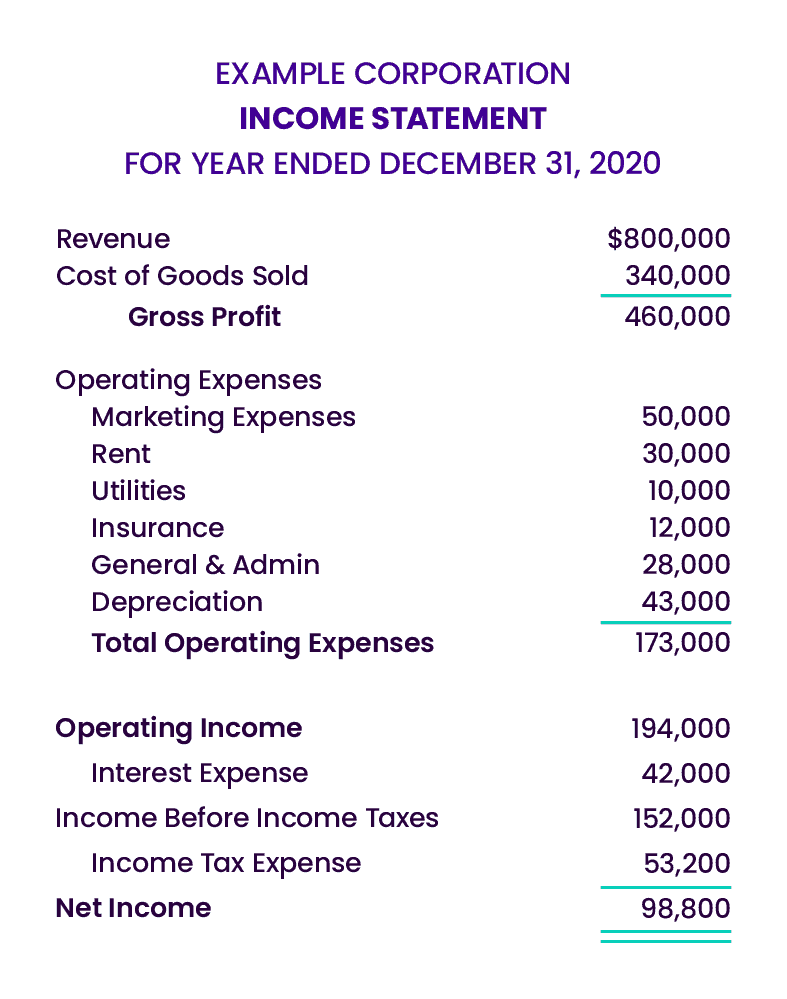
An income statement example is one of the easiest ways to understand how businesses track their financial performance. Whether you are a student learning accounting, a small business owner checking profits, or someone interested in financial reporting, an income statement provides a clear picture of a company’s revenue, expenses, and net income over a specific period.
In simple terms, an income statement answers an important question: Did the business make money or lose money during a particular period? This financial statement is commonly prepared monthly, quarterly, or annually.
What Is an Income Statement?
An income statement is a financial report that summarizes a company’s financial results during a specific period. It generally includes revenue earned by the business, the costs involved in generating that revenue, operating expenses, and the resulting profit or loss.
Unlike a balance sheet, which shows what a company owns and owes at a particular point in time, an income statement focuses on business activity over a period.
The basic formula is:
Revenue − Expenses = Net Income
If revenue is greater than expenses, the business has a profit. If expenses are greater than revenue, the business reports a loss.
Simple Income Statement Example
Let’s consider a small business called ABC Services. Suppose the company wants to prepare an income statement for the year ending December 31, 2025.
ABC Services
Income Statement
For the Year Ended December 31, 2025
| Item | Amount |
| Service Revenue | $100,000 |
| Cost of Services | $30,000 |
| Gross Profit | $70,000 |
| Rent Expense | $12,000 |
| Salaries Expense | $25,000 |
| Utilities Expense | $3,000 |
| Advertising Expense | $5,000 |
| Office Supplies Expense | $2,000 |
| Total Operating Expenses | $47,000 |
| Operating Income | $23,000 |
| Interest Expense | $2,000 |
| Income Before Tax | $21,000 |
| Income Tax Expense | $4,000 |
| Net Income | $17,000 |
This example shows that ABC Services generated $100,000 in revenue during the year. After deducting the cost of providing its services and other expenses, the company earned $17,000 in net income.
Main Components of an Income Statement
Understanding the major sections of an income statement makes financial reports much easier to read.
1. Revenue
Revenue represents the money a business earns from selling products or providing services. It is usually listed near the top of the income statement.
For example, if a company sells products worth $80,000 during a month, its sales revenue may be reported as $80,000.
Revenue can come from different sources, depending on the nature of the business. A retail company may earn sales revenue, while a consulting company may earn service revenue.
2. Cost of Goods Sold
For businesses that sell physical products, cost of goods sold (COGS) represents the direct costs associated with producing or purchasing the products sold.
For example, if a store sells products for $50,000 and those products cost the business $20,000, the company has $20,000 in cost of goods sold.
Revenue minus COGS gives the company’s gross profit.
Gross Profit = Revenue − Cost of Goods Sold
3. Operating Expenses
Operating expenses are the costs associated with running a business that are not directly included in the cost of producing the products or services.
Common operating expenses include:
- Rent
- Employee salaries
- Utilities
- Advertising
- Insurance
- Office supplies
- Software expenses
- Administrative costs
Managing these expenses is important because high operating costs can reduce a company’s overall profitability.
4. Operating Income
Operating income shows how much profit a business generates from its normal business activities before considering certain non-operating items such as interest and taxes.
The basic calculation is:
Operating Income = Gross Profit − Operating Expenses
In the example above, ABC Services has a gross profit of $70,000 and operating expenses of $47,000. Therefore, its operating income is $23,000.
5. Taxes and Interest
Some income statements also include interest expenses and income tax expenses.
Interest expense may occur when a company has loans or other forms of debt. Taxes represent the amount the business owes to the government based on applicable tax rules.
After these amounts are deducted, the company arrives at its net income.
What Is Net Income?
Net income is one of the most important figures on an income statement. It represents the amount remaining after all applicable expenses have been deducted from revenue.
For example:
Revenue = $100,000
Total Expenses = $83,000
Net Income = $17,000
A positive net income means the company earned a profit during the reporting period. A negative result generally means the business experienced a net loss.
Why Is an Income Statement Important?
An income statement is useful for both business owners and people outside the company.
Business owners can use it to determine whether their company is profitable and identify areas where expenses may need better management. Investors and lenders can use financial statements to evaluate a company’s financial performance and trends.
An income statement can also help businesses compare performance from one period to another. For example, a company may compare its current year’s revenue and expenses with the previous year’s results.
Single-Step vs. Multi-Step Income Statement
There are different formats for presenting an income statement.
A single-step income statement uses a relatively simple calculation. It adds all revenues together and subtracts all expenses to determine net income.
A multi-step income statement provides more detail. It separates operating activities from other items and commonly shows figures such as gross profit and operating income.
For educational purposes, a simple income statement example is often enough to understand the basic structure. Larger organizations may use more detailed financial reporting formats.
How to Create an Income Statement
Creating an income statement can be straightforward when the necessary financial information is available.
First, determine the reporting period, such as a month, quarter, or year. Next, collect all revenue information for that period.
Then list the direct costs associated with products or services, followed by operating expenses. Subtract the relevant expenses from revenue to calculate gross profit, operating income, and ultimately net income.
It is important to organize the information consistently so that the statement can be compared with previous periods.
Common Mistakes to Avoid
When preparing an income statement, businesses should avoid mixing personal expenses with business expenses. They should also make sure that revenue and expenses are recorded in the appropriate reporting period.
Another common mistake is forgetting smaller expenses. Even relatively small costs can become significant when they accumulate over time.
Businesses should maintain accurate records and review their financial statements regularly.
Final Thoughts
An income statement example makes it easier to understand how financial performance is measured. By showing revenue, costs, operating expenses, taxes, and net income, an income statement gives readers a useful overview of whether a business generated a profit or loss.
The most important concept to remember is simple: start with revenue, subtract the relevant expenses, and calculate the resulting net income. Once you understand these basic sections, reading and creating an income statement becomes much easier.
Whether you are studying accounting or managing a small business, learning how to read an income statement is an important financial skill. A well-prepared statement can help you understand business performance, identify financial trends, and make better decisions based on actual financial information.