
When writing an essay, article, blog post, academic paper, or professional document, using the same word repeatedly can make the content sound boring and repetitive. One of the easiest ways to improve your writing is to use synonyms. If you are searching for an example synonym, you can choose from several alternative words depending on the context and meaning of your sentence.
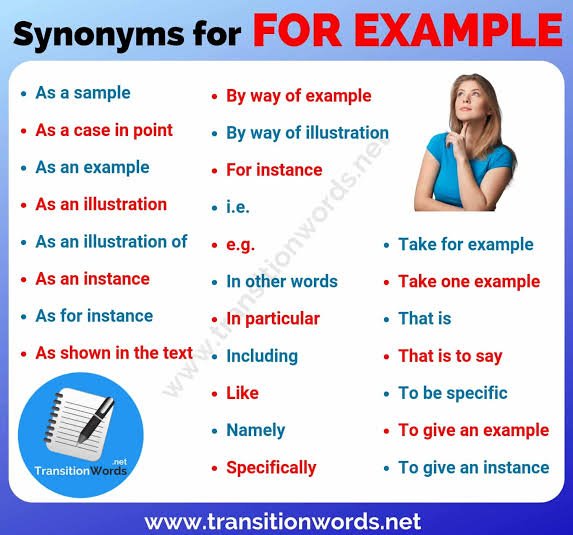
A synonym is a word that has the same or a very similar meaning as another word. For the word “example,” there are many useful alternatives, including instance, illustration, sample, case, model, demonstration, specimen, and representative. However, not every synonym works perfectly in every sentence. Understanding the context is important when selecting the right word.
What Is an Example Synonym?
An example synonym is a word or phrase that can be used instead of the word “example” while maintaining a similar meaning. For instance, instead of saying, “This is an example of excellent writing,” you could say, “This is an illustration of excellent writing.”
Synonyms help writers make their content more natural, interesting, and varied. They are especially helpful when you need to mention similar ideas several times without repeating the same vocabulary.
For example:
- Example → Instance
- Example → Illustration
- Example → Sample
- Example → Case
- Example → Model
- Example → Demonstration
- Example → Specimen
The best choice depends on what you are trying to communicate.
Common Synonyms for Example
There are many alternatives to the word “example.” Some are suitable for everyday writing, while others are more appropriate for academic or professional content.
1. Instance
“Instance” is one of the closest synonyms for “example.” It is often used when referring to a particular occurrence or situation.
Example:
“This is an instance of how technology can improve education.”
The word “instance” sounds slightly more formal than “example,” making it useful for academic and professional writing.
2. Illustration
“Illustration” can describe something that explains or demonstrates an idea. It is commonly used when discussing concepts that need clarification.
Example:
“The story provides an illustration of the importance of teamwork.”
This word is especially useful when you want to explain an idea through a situation, story, or visual representation.
3. Sample
“Sample” refers to a small part or selection that represents a larger group or category.
Example:
“The teacher provided a sample of a well-written essay.”
The word “sample” is commonly used in education, research, business, and product descriptions.
4. Case
“Case” is another useful alternative, particularly when discussing a particular situation.
Example:
“This case shows why careful planning is important.”
The phrase “case study” is also widely used in academic and business contexts.
5. Model
“Model” can mean an example that demonstrates how something should be done.
Example:
“The company created a model for improving customer service.”
A model can serve as a standard or guide that others can follow.
Why Are Synonyms Important?
Using synonyms can significantly improve the quality of your writing. Repeating one word too often may make your sentences feel unnatural. By using suitable alternatives, you can create smoother and more engaging content.
For students, synonyms can make essays and assignments more sophisticated. For bloggers, they can make articles easier and more enjoyable to read. Professional writers can also use synonyms to maintain a polished writing style.
Synonyms can also help you communicate subtle differences in meaning. Although two words may be similar, they may have different levels of formality or may work better in specific situations.
For example, “sample” and “illustration” are both related to “example,” but they are not always interchangeable.
Example Synonym in Academic Writing
Academic writing often requires a formal and precise vocabulary. Instead of repeatedly using “example,” writers can use words such as instance, case, illustration, evidence, or demonstration, depending on the sentence.
Consider this sentence:
“An example of climate change can be seen in changing weather patterns.”
It could be rewritten as:
“An instance of climate change can be observed in changing weather patterns.”
Another option is:
“This case demonstrates the effects of changing weather patterns.”
Using different vocabulary can make an academic paragraph more polished while avoiding unnecessary repetition.
Example Synonym for Everyday Writing
In casual writing, you do not always need complicated alternatives. Simple words such as “sample,” “case,” or “instance” can work well.
For example:
“Can you give me an example?”
You could say:
“Can you give me an instance?”
However, in everyday conversation, “example” is often the most natural choice. Synonyms should be used when they genuinely improve the sentence rather than simply replacing words for the sake of variety.
How to Choose the Right Synonym
Choosing the correct synonym requires understanding the context. Before replacing “example,” consider what you mean.
If you are talking about a particular situation, instance or case may work well.
If you are showing how something works, demonstration may be better.
If you are providing a small representation of something larger, sample is usually appropriate.
If you are presenting something that others can follow, model may be the best choice.
For example:
- A particular event → Instance
- An explanation → Illustration
- A small representation → Sample
- A specific situation → Case
- A standard to follow → Model
- Showing how something works → Demonstration
This approach helps you select a synonym based on meaning rather than simply choosing a word that appears in a synonym list.
Example Synonyms in Different Sentences
Here are some practical examples:
Original:
“She gave an example of good leadership.”
Using “illustration”:
“She gave an illustration of good leadership.”
Using “instance”:
“She described an instance of good leadership.”
Using “case”:
“She discussed a case involving effective leadership.”
Using “model”:
“She presented a model of effective leadership.”
Each sentence has a slightly different meaning, which shows why context matters when selecting a synonym.
Benefits of Using the Right Synonyms
Using appropriate synonyms has several benefits. First, it reduces unnecessary repetition. Second, it makes your writing more engaging. Third, it allows you to express ideas more precisely.
Synonyms can also help you adjust the tone of your writing. A casual article might use “sample” or “case,” while an academic paper may use “instance” or “illustration.”
However, writers should avoid using unusual words simply to make their writing appear more advanced. A synonym is useful only when it fits naturally into the sentence.
Final Thoughts
Finding the right example synonym can make your writing clearer, more varied, and more professional. Words such as instance, illustration, sample, case, model, and demonstration can all serve as alternatives to “example,” but each has its own specific use.
The key is to understand the context before selecting a synonym. Instead of replacing every occurrence of “example,” choose an alternative only when it improves the meaning or flow of your writing.
Whether you are writing a school assignment, academic paper, website article, business document, or casual post, having a strong vocabulary gives you more ways to express your ideas. Learning useful synonyms is therefore a simple but effective way to become a more confident and flexible writer.